Driving America Forward with Saurabh Nayak
"Zum is using AI to solve real-world transportation challenges and make the school bus experience safer, simpler, and more efficient."
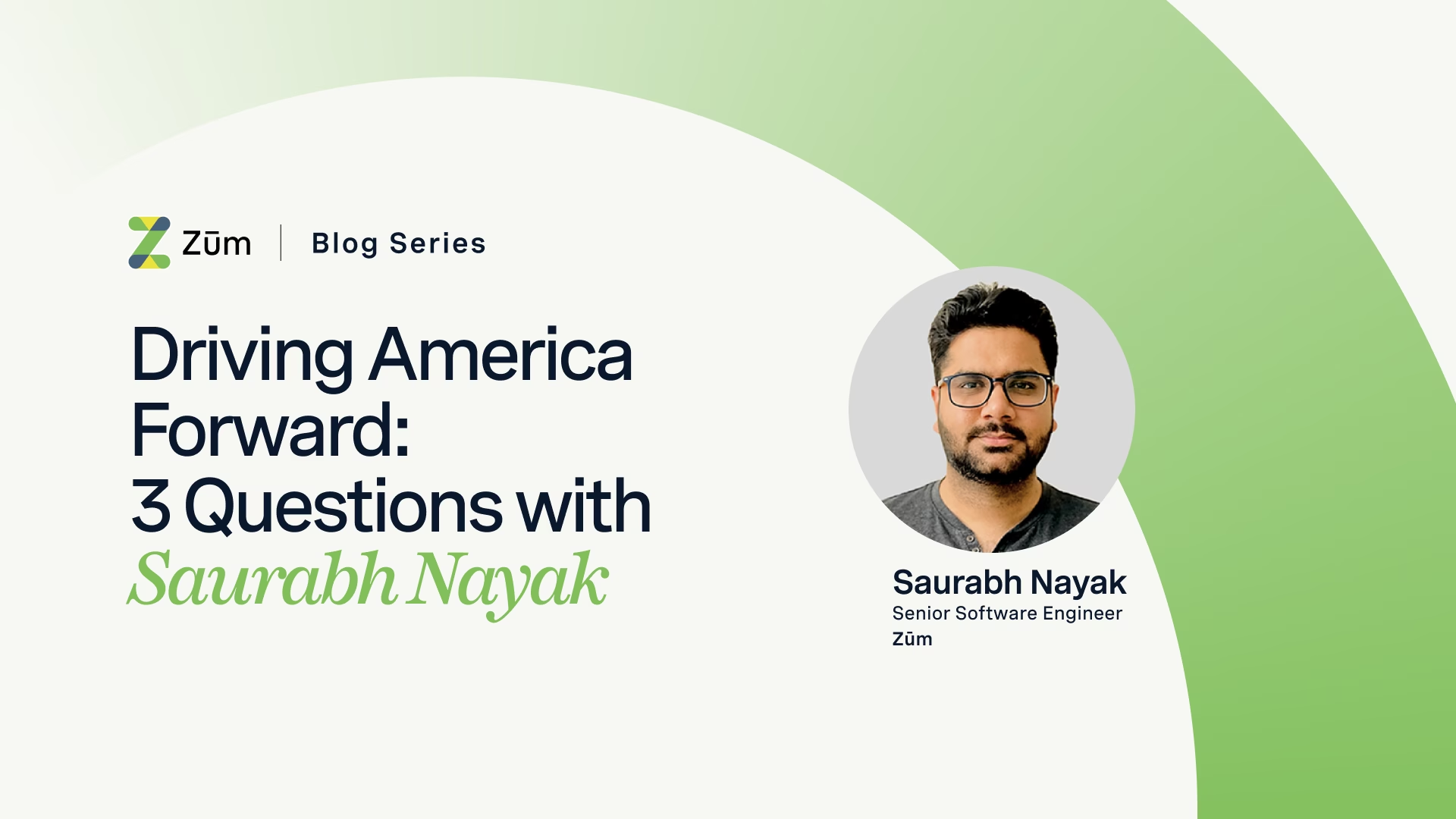
Saurabh Nayak
Senior Software Engineer
Zum
A longtime big-tech veteran, Saurabh began his career at Amazon before joining Microsoft, where he worked on Azure, and later TikTok. Introduced to Zum by a friend, he was drawn to the opportunity to solve a meaningful real-world problem: getting students to and from school safely and reliably. Today, he is a Senior Software Engineer at Zum.
Question 1:
In your role at Zum, how do you think about innovation?
At Zum, innovation means shortening the path from an idea to real-world impact for students, families, and schools.
As a software engineer, my core responsibility remains the same: solving meaningful problems and delivering effective solutions. AI coding agents help me move faster by reducing repetitive work, catching potential issues, and exploring solutions from multiple angles. This gives me more time to focus on complex challenges and the people who rely on our technology.
Question 2:
From your perspective, at a company-wide level, how is Zum driving American innovation forward?
Zum is using AI to solve real-world transportation challenges and make the school-bus experience safer, simpler, and more efficient. For example, we created an AI chatbot that helps parents quickly access transportation information and support. They can ask a range of questions—including “Where is my child?”—and receive timely details about their child’s bus, route, and expected arrival time. It’s one example of how Zum uses innovation to improve everyday experiences for families.
Question 3:
When you think of the future, what role do children/the next generation play, and how can we set them up for success?
My niece rides the school bus in Los Angeles, but her district isn’t served by Zum. Her bus is often delayed, which sometimes makes her late for school. The difference compared with students who ride Zum buses is striking.
The best thing we can do is expand access to reliable, technology-enabled transportation. When students experience fewer delays and always know where their bus is, they see firsthand how innovation can solve real-world problems. That experience can build trust in technology and inspire them to carry that problem-solving mindset into the future.