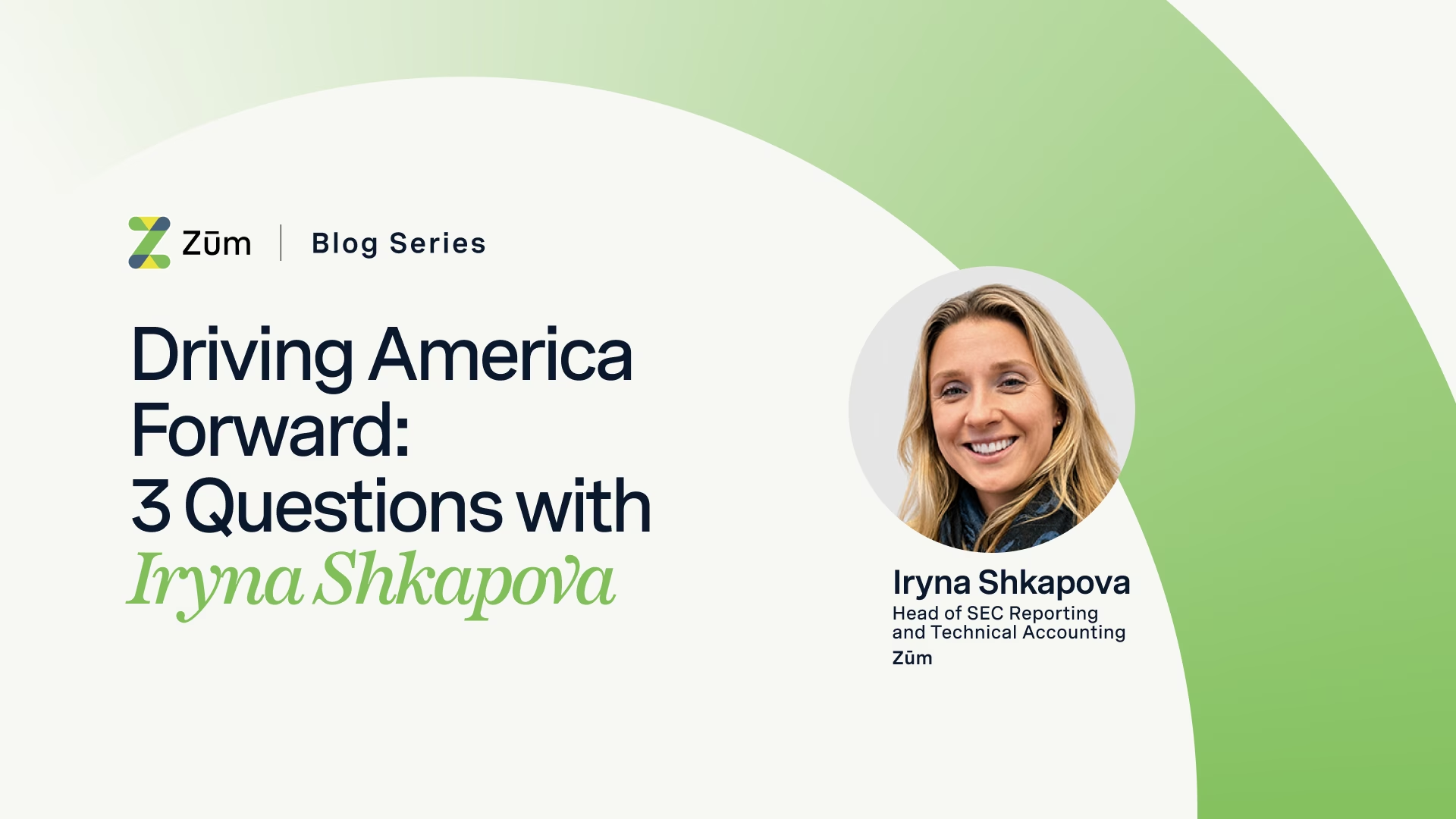
Driving America Forward with Iryna Shkapova
"Zum is redefining transportation by creating what we call a Connected Mobility Experience. We are not simply transporting students from one place to another – we are integrating technology into every part of the experience for students, parents, and school administrators."
Iryna Shkapova
Head of SEC Reporting
and Technical Accounting
Zum
Iryna Shkapova began her career in public accounting at KPMG, auditing technology companies in Silicon Valley. She then spent 15 years at Yahoo and RingCentral, focusing on technical accounting and reporting. Iryna is excited to bring her experience to Zum and is energized by the transformational, challenging, and rewarding process of helping guide the company through its next stage of growth and development.
Question 1:
In your role at Zum, how do you think about innovation?
To me, innovation is about using the latest technology as a tool to make work more efficient, streamlined, and impactful. Today, we’re living through the next technological revolution with artificial intelligence. It is important to actively engage with AI – learn to incorporate it into our workflows, improve how we operate, and rethink how work gets done every day.
I joined Zum at the beginning of the year. I’m on a lean team, and so AI has become a valuable partner for me, helping me lay the foundation for core functions - helping pressure-test ideas, find inefficiencies, organize complex information, and accelerate analysis. It reduces manual, time-intensive work, allowing us to focus more on strategic thinking and building scalable infrastructure for the future.
This technology is not replacing people – it is amplifying their skills and accelerating their ability to learn. The companies that embrace AI thoughtfully empower employees to work smarter, make better decisions, and create more value. As Zum grows, AI will continue to be an important tool in helping us scale our reporting, analytical capabilities, and operational processes.
Question 2:
From your perspective, at a company-wide level, how is Zum driving American innovation forward?
In my opinion, the electrification of our fleets is a massive leap forward in improving our lives and communities. Growing up I also had to commute to school on a diesel bus. To this day, the smell of diesel instantly brings me back to that experience - it’s visceral and reminds me of the headaches it caused.
Building the kind of transportation network where children can ride to school in clean, quiet EVs is truly life-changing. I want future generations to take clean air for granted.
Zum is also redefining transportation by creating what we call a Connected Mobility Experience. We are not simply transporting students from one place to another – we are integrating technology into every part of the experience for students, parents, and school administrators.
Finally, looking ahead, I also believe autonomous vehicles are part of the future of transportation. The next stage of innovation will be figuring out how autonomous technology fits into business models like ours in a safe and operationally effective way. It’s exciting to think about how Zum can continue evolving alongside advancements in mobility and AI-driven transportation.
Question 3:
When you think of the future, what role do children/the next generation play, and how can we set them up for success?
I think about this often. In my view, the best way to prepare the next generation for success is to teach them how to use emerging new technologies as a tool to learn, create, and empower themselves.
I’m encouraged to see this is happening in my kids’ school. My older daughter is in eighth grade, and her English teacher does not perceive AI as a threat to her students’ education. Instead, she encourages them to engage with it thoughtfully and use it appropriately for certain assignments and tasks.
I think that’s exactly the right approach. AI is becoming part of everyday life and work, and students should learn how to use it responsibly and effectively. If they learn those skills early, they’ll enter the workforce prepared to use AI not as a shortcut, but as a tool that strengthens critical thinking, creativity, and productivity.